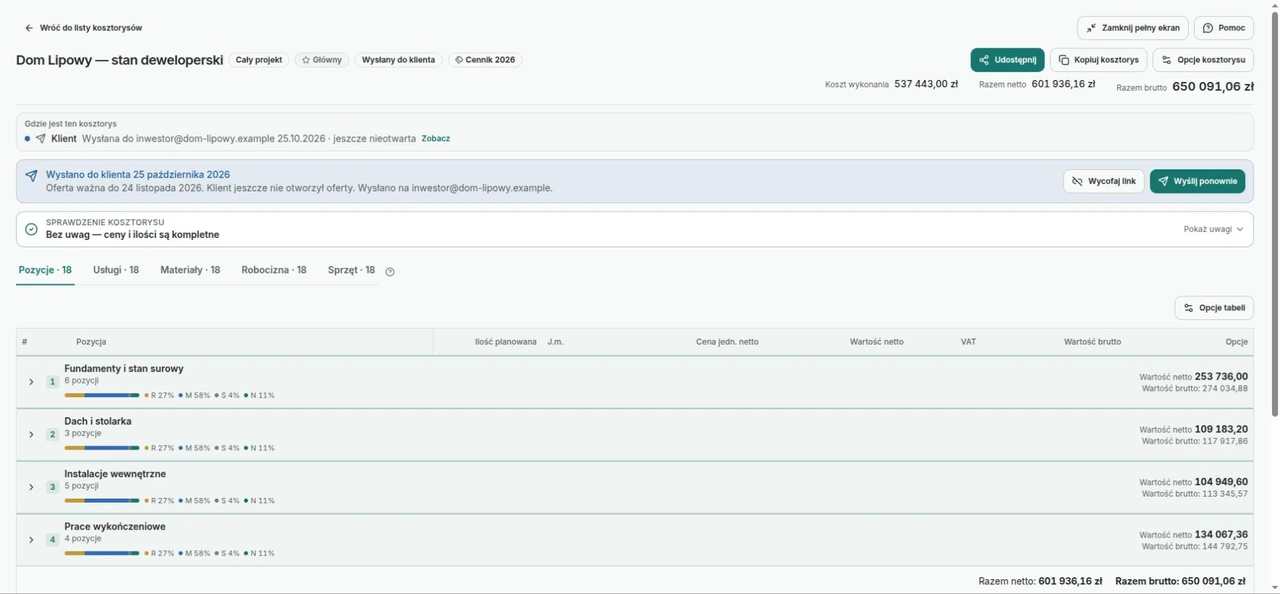
1. Write down exactly what the estimate covers
Split the job into rooms or parts of the building. Name the work and its limits. Replace “Paint the room” with a description such as “Prepare the identified walls and paint them in the agreed colour”.
Record furniture protection, delivery, moving materials and cleaning separately. List excluded work. If the surface needs inspection, mark that question. Keep the date and version of the drawing used for measurements.
2. Make the quantities easy to check
This rectangular room measures 4 × 5 m and is 2.7 m high. It has one 0.9 × 2 m door and one 1.2 × 1.5 m window. The table illustrates area calculations. Agree how openings and surrounding work will be treated in your offer.
| Item | Calculation | Quantity |
|---|---|---|
| Floor | 4 × 5 | 20 m² |
| Ceiling | 4 × 5 | 20 m² |
| Walls before subtracting openings | 2 × (4 + 5) × 2.7 | 48.6 m² |
| Door and window | (0.9 × 2) + (1.2 × 1.5) | 3.6 m² |
| Walls after subtracting these openings | 48.6 − 3.6 | 45 m² |
3. Separate work area from material orders
To order materials for 45 m² of walls, check the product, planned coats and manufacturer’s stated conditions. Record assumed coverage and pack size. Explain any cutting or waste allowance using the actual job. Each material needs its own assumptions.
Distinguish the quantity needed for the work from the quantity ordered. Full packs can produce a different total. Agree who orders the materials and what happens to anything left over.
- Keep the unit beside every quantity: m², m, pieces or packs.
- Record the source and date of material prices, plus delivery costs.
- Mark materials supplied by the customer separately.
4. Describe labour with the same care
Choose the agreed pricing basis: a quantity of work, time or the complete described scope. For an area rate, state which tasks it covers. For hourly work, agree how hours will be recorded and confirmed. Keep different units on separate lines.
Start with your records from similar jobs. Account for site conditions, travel and work arrangements. Mark unconfirmed assumptions. Confirm completion dates separately from estimated working time.
5. Keep a record of changes
When the customer changes the scope, show additions and removals separately. Record the new quantity, the reason and who confirmed the change. Link that decision to the correct estimate version. Keep the earlier offer that the customer accepted.
Before buying materials, check whether the order includes the change. One decision may affect quantities, crew work and dates. Record these effects together and update the affected arrangements.
6. Review the offer before sending it
Read the offer from your customer’s point of view. They should be able to identify the scope, anything they must supply and questions still open. Include the preparation date and how long the stated terms remain valid. Keep the sent version with the project.
- Does each quantity have a unit and a measurement source?
- Have any materials or labour been counted twice?
- Are delivery, preparation and cleaning clearly described?
- Can the customer see exclusions and unconfirmed assumptions?
- Does the total match the individual lines?
Agree the scope first. Then show quantities, materials and labour. Keep each change as a new version with a record of what was agreed. In Kaldrix, start with a project and a few estimate items; attach the plan behind your quantities.