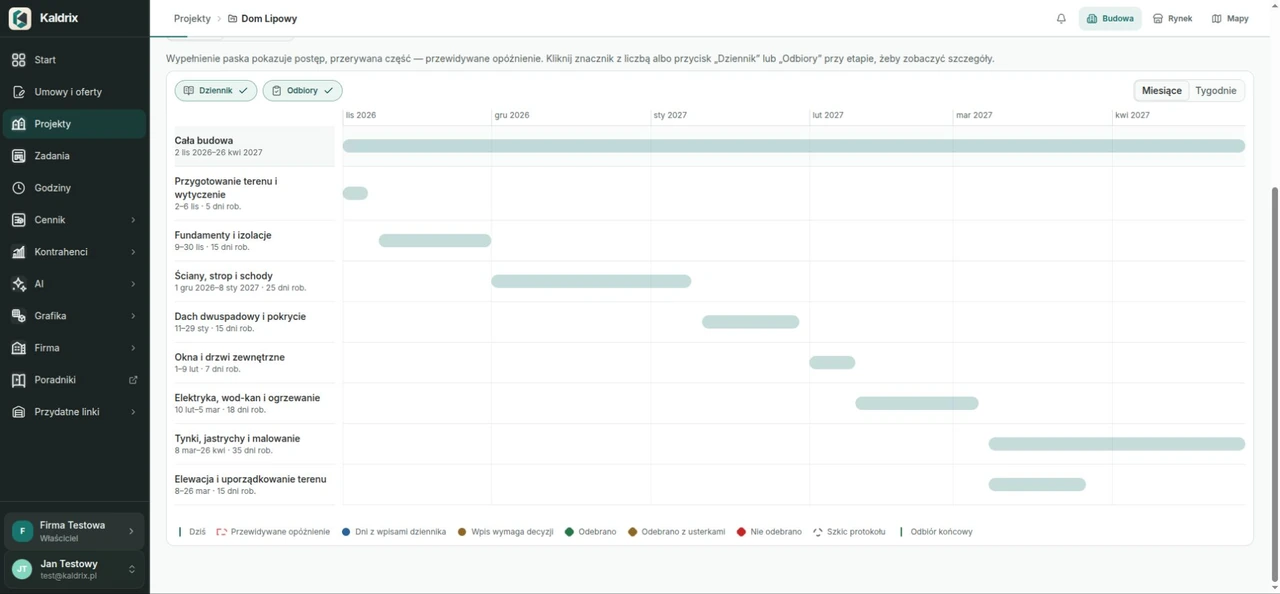
1. Split the scope into clear tasks
Use names from the offer and project so everyone means the same work. Give each task a defined result and place. Choose enough detail to assess progress and keep the list current.
Record who updates each task and who confirms completion. A crew name alone may leave this unclear. Agree who receives information about a blocker. One person may hold several roles in a small business, but those responsibilities should still be explicit.
2. Record what each task is waiting for
Before entering dates, speak to the people responsible for the work. Record the agreed conditions for starting: a customer decision, room access, a delivery or confirmation of earlier work. The people responsible for the trades determine the technical sequence. The schedule records their agreements.
This example covers arrangements around one task. It does not prescribe a sequence of construction work or how long the work should take.
| Arrangement | Who confirms it | What to record |
|---|---|---|
| Customer choice | Customer contact | The chosen version and confirmation date |
| Material delivery | Person placing the order | Confirmed date and receiving location |
| Crew availability | Crew lead | Agreed dates and crew members |
| Readiness to start | Coordinator | Met conditions and open questions |
3. Distinguish proposed and confirmed dates
Mark whether a date is proposed or agreed. Keep the original plan alongside current arrangements, so you can see the movement and its reason. Preserve that history when updating the schedule.
Check the same crew’s commitments on other projects. Include the availability of the person receiving a delivery or providing building access. If a date depends on an unresolved question, keep that question beside the task. This makes it easier to discuss what needs a decision.
4. Agree a short update routine
Agree when the responsible people review the schedule. Collect three things at each update: completed work, blockers and the date currently confirmed. Add a description of remaining work to any progress percentage. “80% complete” can mean different things to different people.
Record working hours against the right crew and task. Time spent and completed scope are separate pieces of information. More recorded hours do not establish completion. Give every blocker a named person responsible for the next action, so that an update leads to a practical step.
5. Check the effects of each change
When a delivery moves, check the tasks waiting for it. Confirm the crew’s new availability and any arrangements needed with the customer. Do not assume that every other date will move by the same amount.
Record when the change was made, why it happened and who confirmed the new agreement. If scope or cost also changed, link the schedule to the relevant offer version. Tell the affected people exactly what changed and what action you need from them.
6. Review the next commitments together
End the review with decisions. Focus on open questions and upcoming commitments. Record the result where the crew checks for updates. Assign someone to each follow-up.
- Which dates still need confirmation?
- Does each blocker have an owner and a next action?
- Are crews, deliveries and building access agreed?
- Who needs to hear about the latest changes?
- Does each completed task have a confirmed result?
Keep an owner, start conditions and current agreements with each task. When a date changes, check dependent work and tell the people involved. Use the Kaldrix schedule to keep stages and current progress with the same project.